Case study
Smart Displays
Led early conceptual design and established the system framework for the first Google Assistant smart displays.
I led early concept work and established the interaction framework for Google's first Assistant smart displays. The screen gave voice responses a persistent visual form that people could read from across a room or use by touch.
Voice alone could not carry the whole interaction
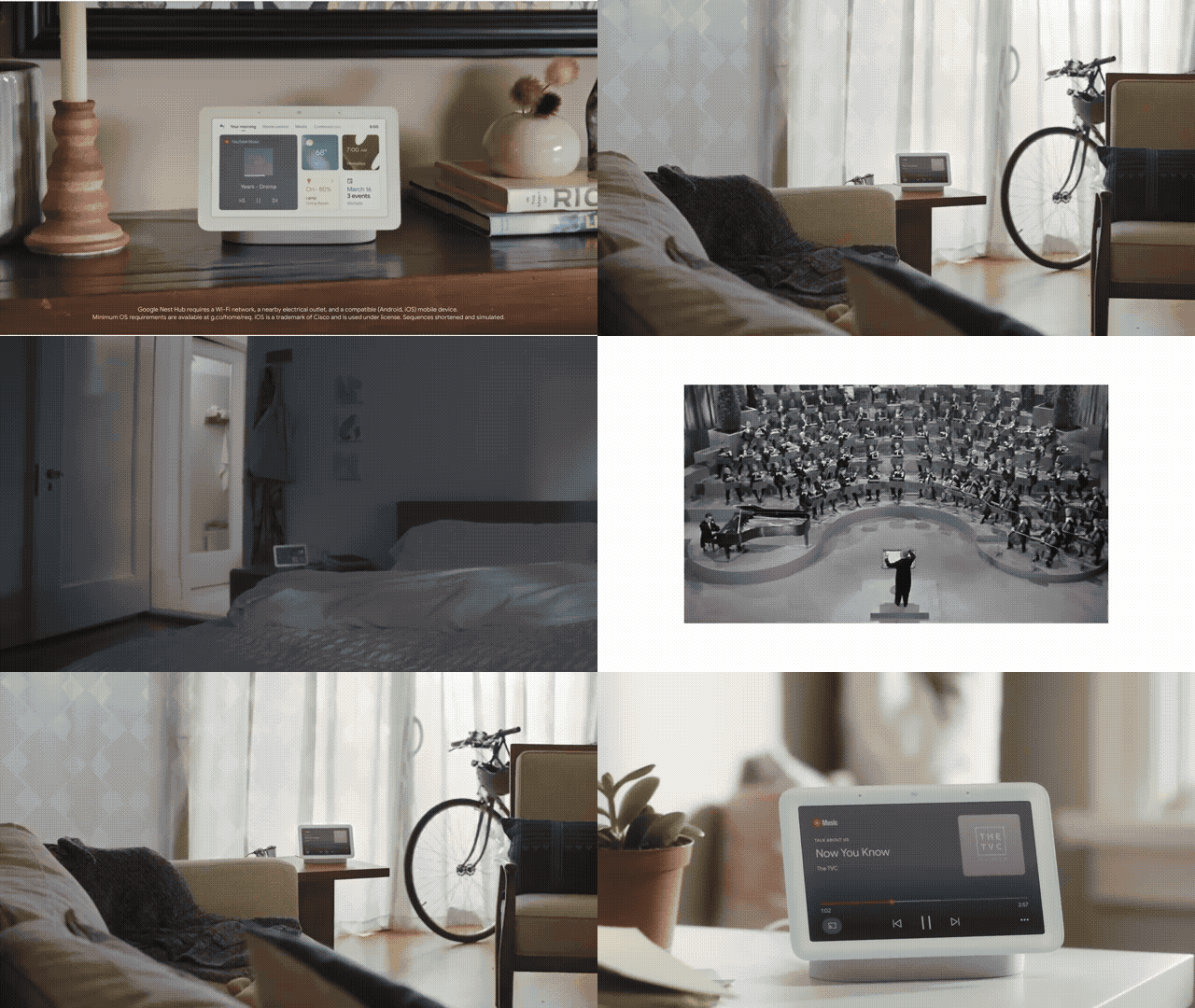
Voice is linear and temporary. It works poorly for comparison, maps, or a recipe that needs to stay visible while someone cooks. Smart Displays paired spoken requests with visual answers that remained available after the response ended.
The interface had to work from across the room and up close
The product sat between a personal phone and a passive television. It lived in shared spaces, usually several feet away, but still supported touch when someone approached it.
We used glanceability as the organizing rule. Each response had to be legible at room distance, then reveal enough detail to support touch without becoming a phone interface on a larger screen.
The framework shipped with Home Hub and scaled beyond it
The work contributed to multiple design patents and the launch of Google Home Hub, later renamed Nest Hub. The interaction framework extended Assistant from voice-only responses to a shared visual system used across smart displays and partner hardware.
Physical prototypes established the interaction rules
There was no existing UI kit for this distance or context. I led low-fidelity hardware prototyping and spatial user research, then translated those findings into the glanceability rules used by the product team.