Hotel Finder
Google Travel / Mobile Web
Travel Hotels
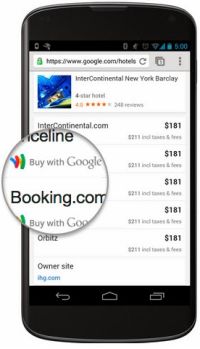
Designed and contributed to the development of Google's first mobile web hotels experience. From user research through visual design and motion.
Designed and contributed to the development of Google's first mobile web hotels experience. From user research through visual design and motion.
Hotel search on mobile was fragmented and frustrating. Users had to navigate between Google Search results, third-party booking sites, and hotel websites—each with different interfaces, pricing, and availability. There was no unified mobile experience for discovering and comparing hotels on Google.
The goal was to create a cohesive mobile web experience that made hotel discovery, comparison, and booking seamless—all without requiring an app download.
Led the full design process from user research and information architecture through wireframes, visual design, and motion design. Worked closely with engineering to ensure responsive behavior across all mobile screen sizes.
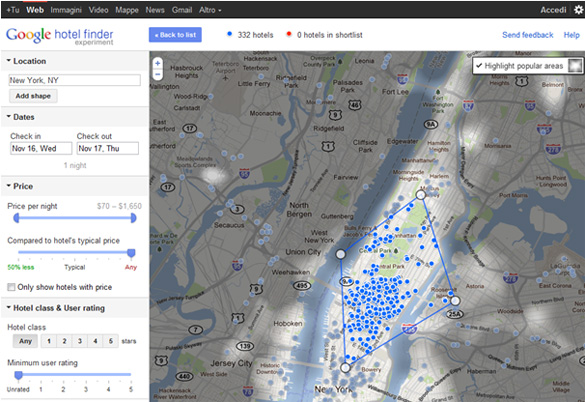
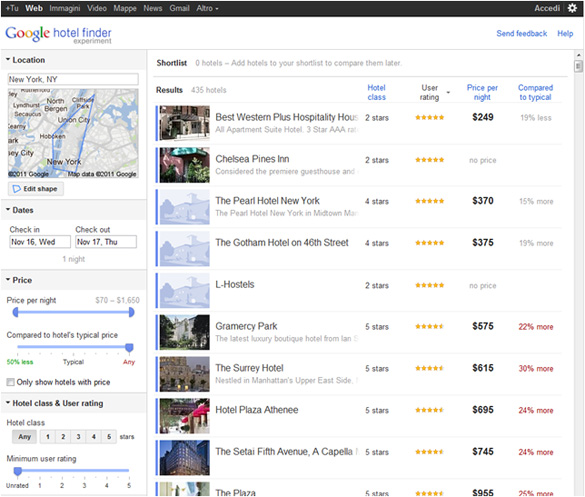
Conducted user research to understand how travelers actually search for hotels—discovering that most users compare on multiple dimensions (price, location, amenities, reviews) and frequently switch between list and map views.
Designed for touch-first interaction with thumb-friendly targets, swipeable cards, and efficient filtering. The interface adapted to show either list or map view prominently based on user preference, with easy switching between modes. Hotel cards displayed key decision-making information at a glance: price, rating, distance, and top amenities.
This work established the foundation for Google Hotels as a product. The mobile-first approach influenced subsequent redesigns, and the information architecture patterns informed how Google presents travel-related search results.
The responsive web experience eventually evolved into the modern google.com/travel/hotels destination, serving millions of hotel searches daily.